FromSoftware are known for creating some of the most well-regarded games in recent memory with 2011’s Dark Souls, succeeding 2009’s Demon's Souls, proving to be a legendary, massive success. They have sustained this level of acclaim with the subsequent entries in the Dark Souls franchise, alongside 2015's Bloodborne, Sekiro: Shadows Die Twice in 2019 and Elden Ring in 2022, now being adapted into a feature film.
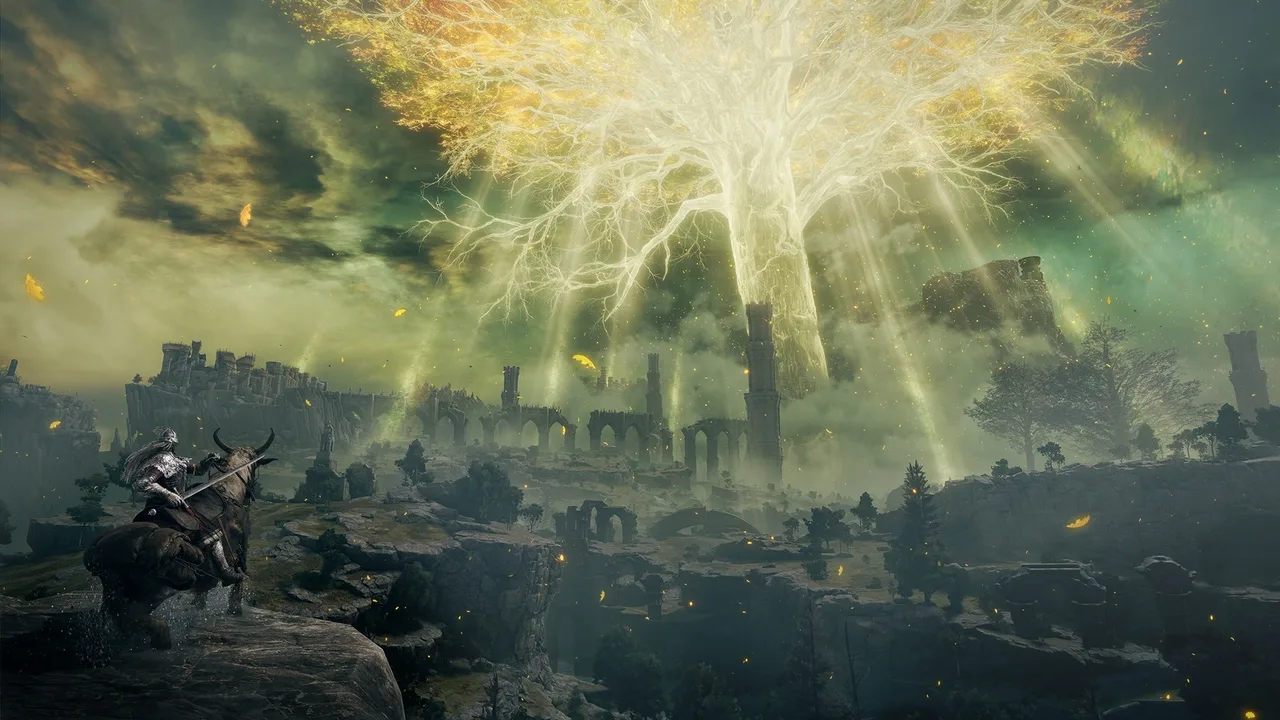
One part of why these games, Elden Ring and Bloodborne in particular, work so well is their world design and immersive atmosphere. Elden Ring’s setting of a decaying high-fantasy world creates an atmosphere that is daunting and almost insurmountable. The immediate object which grabs the player’s attention is the monolithic Erdtree, the centrepiece of the land. It immediately towers over the player, creating a formidable sensation as it looms above.
https://www.youtube.com/watch?v=E3Huy2cdih0
This is Elden Ring’s main form of creating a deeply tangible environment. The Lands Between are oppressive and the biggest example is the Erdtree as one of the first things you see upon leaving the first dungeon and entering Limgrave. The scale is not limited to that one tree however: Elden Ring continuously creates daunting environments to make the player feel challenged. The walls of Leyndell are, for instance, almost impossibly huge, and it feels as though you are about to traverse a titan with Leyndell almost being labyrinthic in design. The arenas where you fight Dragonlord Placidusax or Bayle the Dread also provide this idea, and the player character feels forever miniscule against the forces you must destroy.
Elden Ring’s atmosphere is enhanced further through the NPCs. The world feels cold and lonely, so it feels like a relief when you encounter others, but some just don’t have any sort of happy ending. Take Sellen, who either gets killed or turned into a hideous object for eternity. It adds to the oppressive, dystopic feel Elden Ring excels at, heightened by the DLC expansion where no characters remain alive by the end — even Ansbach and Thiollier if you do their questlines.
Shadow of the Erdtree also creates a sense of loneliness and oppression through its greater verticality. The Abyssal Woods feel genuinely harrowing to explore; not just for the enemies, but with its surroundings. It is utterly devoid of life and situated far below the rest of the DLC area with a thick fog permeating. Despite how frightening Elden Ring’s world can appear, it is also not without its wonders. The game has spectacular art direction which elevates the world, as seen in Siofra, Ainsel and the Underground Cities. The galactic imagery feels alien to the rest of the game but gives the Underground Cities a unique and cosmic feel. It invokes a sort of bizarre and unfamiliar loneliness that is oddly more comforting due to the vastness of space.
Oddly enough, it even evokes a similar feeling to the Super Mario Galaxy games: able to create a sense of intergalactic, marooned loneliness and beauty in the first game amid sheer wonder and at times, confusion in the second through their skyboxes. The world is much grander than the player, yet the player has all the tools to come out on top.
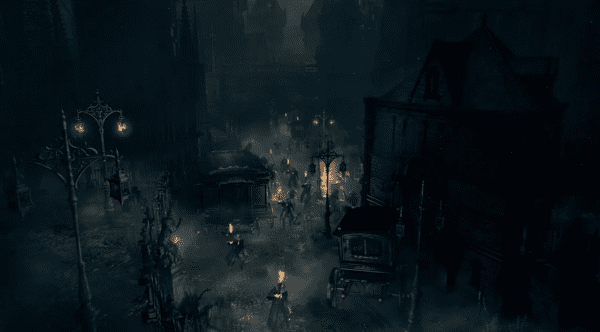
Bloodborne is, by comparison, less optimistic. Taking place in Yharnam's grimy Victorian London aesthetic that transfuses with gothic architecture, the world is in ruin, but it feels far more harrowing and almost horror-like at points. Bloodborne creates a sense of unease through the lack of background music. Boss fights almost feel like a relief because the music has returned; there’s a sense of familiarity even if you are fighting for your life against the Orphan of Kos (weirdly the only challenging boss fight in my eyes). The beasts of the night are ever-prowling, and there’s very little in terms of friendly areas. The Hunter’s Dream feels isolating and the NPCs in Oedon Chapel are not likely to have a happy fate.
Credit: FromSoftware & Sony Computer Entertainment
The Hunter’s Nightmare in the DLC feels entirely uncanny at points, especially with the first area being almost an exact copy of the Cathedral Ward but with just enough different for it to feel odd. The Fishing Hamlet feels unsettling with the life being drained from it, tying into the lore. The Forbidden Woods and Central Yharnam feel cold and uninviting, enhanced by the revelation that the Beasts are people.
Everyone suffers in Yharnam and nowhere is that more apparent than an early quest involving the young daughter of Father Gascoigne, the game's first required boss. There are ultimately no positive outcomes, with her dying one way or another, either out of grief if you tell her that her mother died or out of concern if you hide the truth from her, and send her to the Chapel. It’s impressive that FromSoftware created such a devastatingly effective quest with someone you never see or don’t even learn their name.
There is no hope for Yharnam. Elden Ring at least provided some within certain NPCs as well as Ranni or Goldmask’s endings. For Bloodborne, everyone just wants to be free from this endless nightmare, including Gehrman, Lady Maria and the Orphan of Kos, central characters and boss fights who are trapped by The Hunt. The endings even seem ambiguous if they will create a better future, with only the true ending leaving a glimmer of hope among immense uncertainty.
And in contrast to Elden Ring's galactic imagery, Bloodborne takes a uniquely cosmic horror approach with how terrifying and bizarre the world is when you gain enough Insight. The experience of first seeing an Amygdala and how it changes the game's atmosphere cannot be forgotten. Instead of wonder, the game fills you with dread.
Elden Ring and Bloodborne simulate the effects of loneliness and oppression through its atmosphere; while Elden Ring achieves this through its titanic setpieces and ultimately hopeful tone, Bloodborne creates a starkly disturbing narrative. A nightmare everyone is eager to wake up from, but may never will.
Comments
Powered by DisqusComments are provided by Disqus.