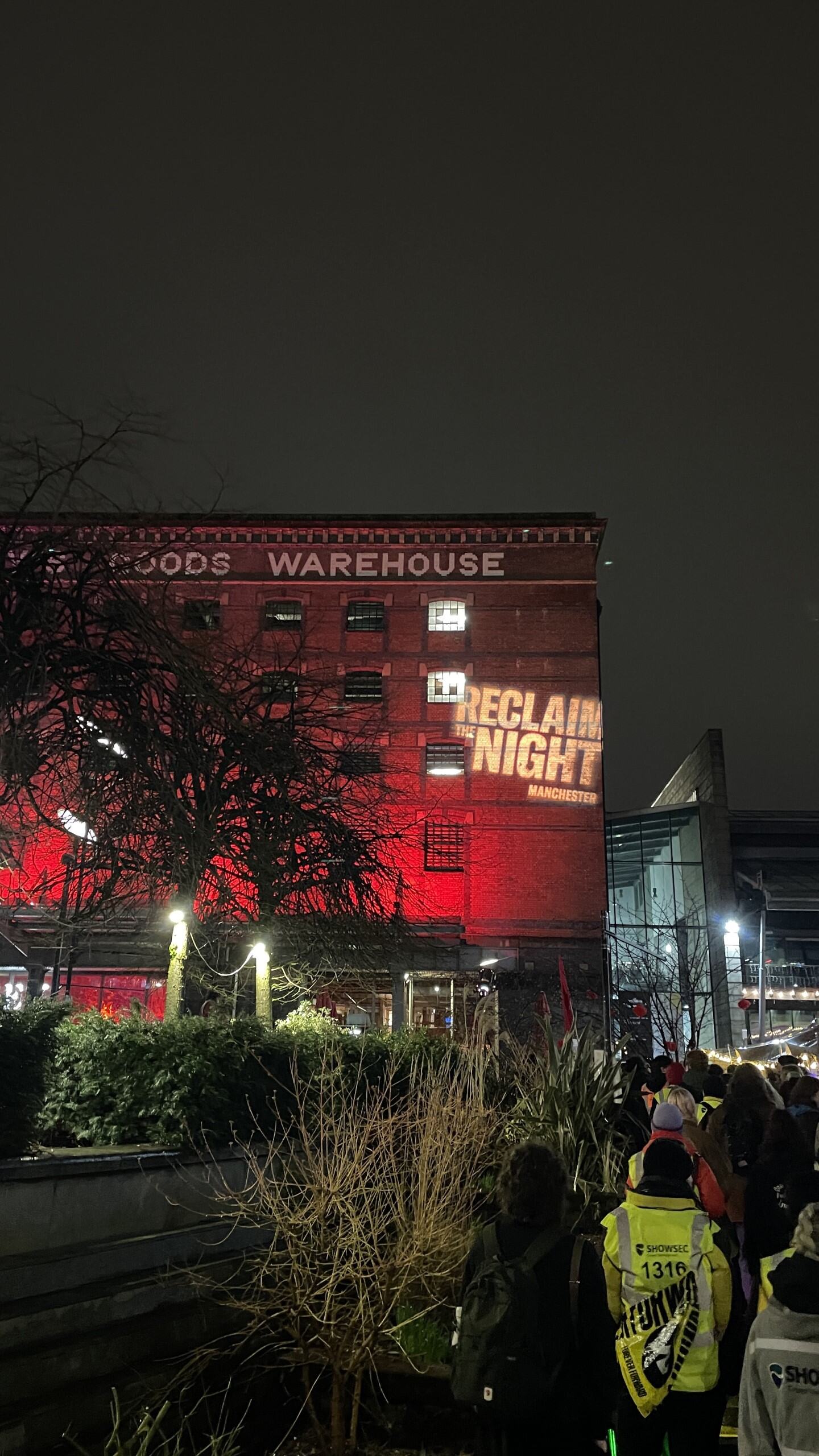
Chants rang out across Manchester on Thursday night as students once again took to the streets for the 2026 Reclaim the Night March.
Organised by the University of Manchester’s Students’ Union, the annual demonstration aims to challenge gender-based violence and demand safer streets for all women and marginalised genders in the city. This marks the 49th year of the campaign which began in 1977 in Leeds, organised by the Women's Liberation Movement.
Several Students' Union Executive Officers were involved in organising the march. Sharon (she/her), the SU's Wellbeing & Liberation Officer, emphasised the three key demands organisers are making this year: improved street lighting, a review of victim support systems, and better safety training for popular student venues.
A team of volunteer stewards supported organisers to ensure the march ran smoothly. "I've never felt as empowered as when I march before, and it's crucial for our female and marginalised gendered students", first-time volunteer steward Frances told us.
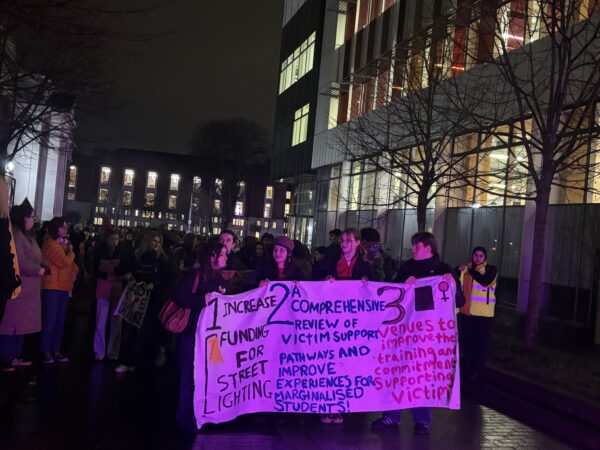
Students display the three demands of this year's march. Credit: Rosie Goffe @ The Mancunion
Union Affairs Officer Lexie (she/her) described the march as an important opportunity for the community "to feel mobilised and empowered", while stressing the need for the University to respond meaningfully to the concerns raised.
For many students, the simple act of occupying public space at night carries particular significance.
“It’s such a good cause”, said Maisie (she/they), a first year Linguistics student. “Women’s issues are so ignored. Getting people together and making a stand is just what needs to happen. It matters because people think it doesn’t matter - that’s why we’ve come and turned up today".
Katie, a second year Chemistry student, highlighted the additional pressures felt by international students when adjusting to life in Manchester: "I, nor anyone else of any gender, should feel unsafe in their own city, and showing that this is something we shouldn't have to deal with is really important".
Many students reflected on the everyday reality behind the slogans and banners: “Every time I get home, behind the door, it’s like a sense of relief” Julia (she/her) told us, making it evident how anxieties around night-time safety remain very much present in students' everyday lives.
While the solidarity amongst those marching was clear, questions lingered about what comes next for Reclaim the Night as it approaches its 50th anniversary.
Lower turnout and fading momentum
Attendance appeared lower than in previous years, marking a noticeable shift for a movement that has often celebrated growing numbers.
Professor Duncan Ivison, the University's Vice Chancellor, attended last year's march but was not to be seen this time.
Neither of the SU Officers interviewed expressed disappointment with the turnout, pointing instead to the community present, including members of the public marching alongside students.
Yet, amongst many attendees, there was a sense that the march had not expanded in the way many hoped.
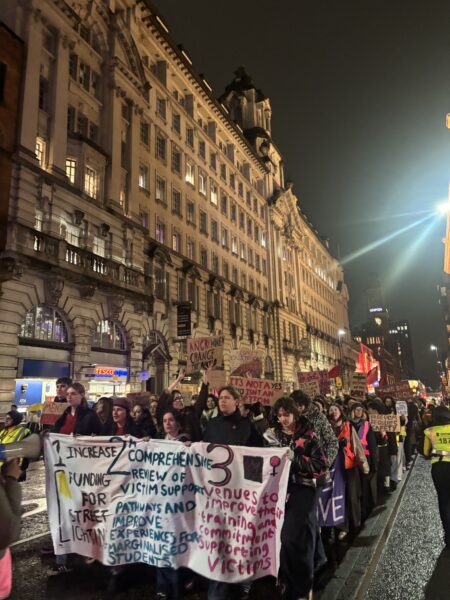
Reclaim the Night marches down Oxford Road.
Credit: Rosie Goffe @ The Mancunion
That feeling carried into the speeches, which were given by student leaders amongst Salford, UoM and MMU student groups and societies.
"I hope that I don't have to see you next year" said Sophie from the Women's Leftist Collective, who questioned whether enough sufficient progress had been made to warrant continued action. "I am not filled with hope, but a sense of complacency", she admitted, reflecting a feeling of frustration that filled the air.
Several speakers centred the safety of immigrant and refugee women, a significant community within Manchester. While the crowd resonated with this commitment, these concerns were not explicitly included in the march's three official demands, leaving uncertainty about what specific actions might follow to protect these women in particular.
Attendee numbers faded further before the end of speeches at 9 PM.
A movement at a crossroads?
While the cause undoubtedly still attracts support, several students questioned whether marching alone is enough to deliver substantial change.
Many attendees said they were unaware of this year's official demands. One student, first year Eesha, who attended with Socialist Students and Fight the Rent Hike, recognised the campaign’s call for street-lighting as a “good aim” but added: “I don’t know if a march is the most concrete thing to get through change”.
Another student Penny echoed the desire for measurable outcomes: “Safety for women in Manchester should definitely be improved. I’m hoping to see tangible changes”.
The atmosphere reflected a clear desire for more community engagement with students and the campaign itself. Politics student Hasan (he/him) argued that city leadership should engage more directly with students: "The mayor should meet with the SU and students. In the city, students are an afterthought… we need to reverse that culture”.
Others directed their attention towards to the University itself, “they do need to engage a lot more” Julia added, while second year Geography student Saf (she/her) described current University support as "very basic", claiming that "they only support students when they’re physically at uni”. Safety in Fallowfield, where many of Manchester's students reside, was of notable concern to those marching.
When contacted for comment, A University of Manchester spokesperson said: "Everyone deserves to feel safe – on campus and in the wider community. We’re committed to working with our Students’ Union and listening to students to keep improving the support we offer. That includes practical tools like SafeZone and other work to strengthen safeguarding and prevention. We know this really matters, and we’re determined to keep making progress.”
Nonetheless, amongst supporters, there was a clear appetite for more defined goals and stronger institutional backing within the campaign. The feeling was not that the caused lacked legitimacy, but that the pathway towards change remains vague.
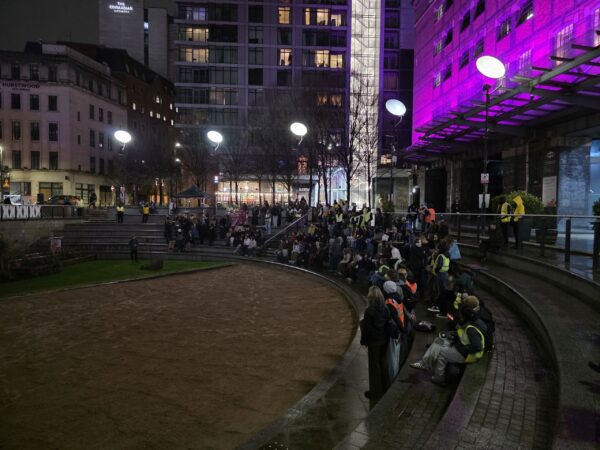
Students gather to listen to the speeches. Credit: Rosie Goffe @ The Mancunion
Accessibility and inclusion: progress, but limits
This year’s march included a designated accessible area and a British Sign Language (BSL) interpreter. Organisers also published chants and the route ahead of time, allowing participants to prepare.
However, implementation of these accessibility measures raised concerns. The BSL interpreter was far from the crowd, positioned in a way that made them difficult to see in the dark. No formal breaks were scheduled throughout the march, which may have limited participation for those with fatigue-related conditions. Low lighting in Great Northern Square was also described as insufficient for those with visual impairments.
A recurring frustration centred around the limited presence of men at the march.
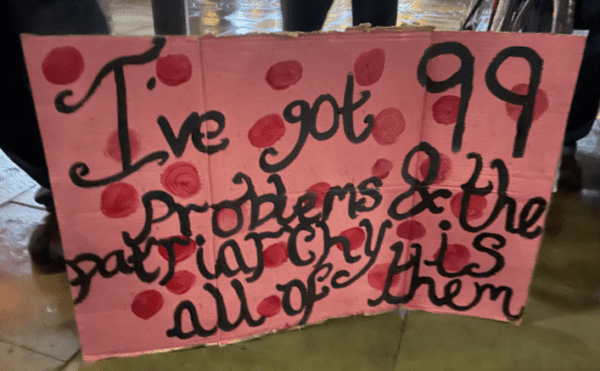
A protester's sign from the march, reading 'I've got 99 problems, and the patriarchy is all of them'. Credit: Delilah Salway-Roberts @ The Mancunion
“It’s so disappointing year on year,” said Hasan. “Without us on board, we aren’t going to see that culture change”.
Partway through the evening, a male bystander stepped towards the front of the protest and shouted abuse at marchers before moving on. The incident was brief, but a reminder of the backlash that still surfaces when women occupy public space in a way that undermines societal norms.
Fourth year Physics student Claudio (he/him) suggested that some men can feel “a little bit attacked by feminism”, adding that it is crucial to communicate that gender equality “is in their interests too”.
These dynamics have promoted discussion about how the movement might broaden participation in future years. Expanding engagement, particularly among men, could help strengthen the campaign's impact.
Despite these concerns, few doubted the importance of continuing, even after nearly five decades of campaigning.
“I think it’s important to keep it going year on year” Claudio told us. “There are still a lot of attacks on women’s rights that go unnoticed”.
So, what comes next?
Reclaim The Night is not disappearing. It continues to draw on committed organisers, passionate speakers and students willing to spend their evening marching through the cold city.
As the crowd dispersed into the city’s streets, the mood was neither triumphant nor defeated.
Reclaim the Night 2026 may have drawn fewer numbers than in previous years, but those who showed up made one thing clear: the conversation is certainly not over.
Comments
Powered by DisqusComments are provided by Disqus.