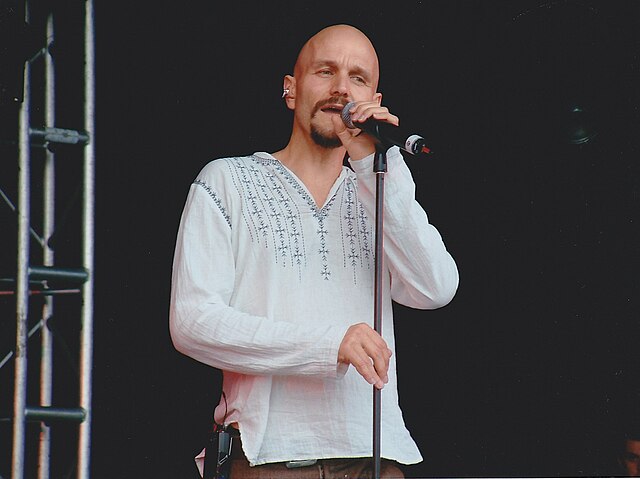
Since forming in 1982, James have been building a dedicated base of die-hard fans, becoming internationally renowned in the process as a group whose diverse discography and outstanding live shows place them leagues above their peers. In November of last year, they released Nothing But Love: The Definitive Best Of, a meticulously curated career-spanning collection complete with two new tracks. The 58-track release spans five twelve-inch vinyl records in its physical form, standing as a testament to the band’s longevity and continued appeal.
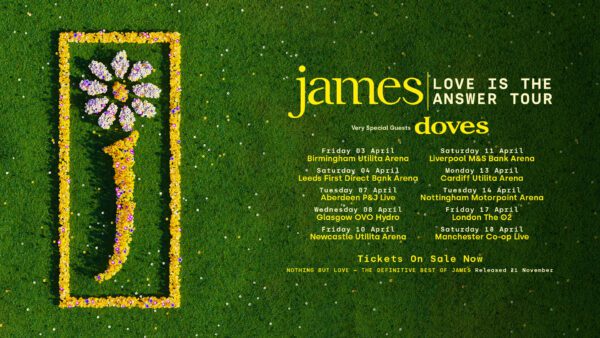
As they prepare for a ten-date tour that will take them to some of the UK’s largest indoor arenas in April, their enthralling frontman Tim Booth discussed this longevity, their live performances, and his University of Manchester background.
To accompany Nothing But Love, James embarked on a run of intimate appearances which included a signing session at Manchester’s Piccadilly Records, as well as planned acoustic sets at Liverpool's famous Cavern Club that unfortunately had to be postponed. Comparing this to the larger rooms they frequently fill, Booth stated “I enjoy both. They both have different hurdles in a way, the arena tours naturally become bigger production models because we want to reach the people at the back. So it means I have to be more physically active, I’ll go walkabout, for example, whereas the intimate shows you don't really have to project much, and it can be a bit more internal. But they both have challenges: the arena shows we chuck a lot of money at to look for inventive ways to get out in the audience or to get further into the venue, to make it more fun for the people at the back”.
Despite the physical and financial cost involved, Booth appreciates the connection and energy facilitated by larger spaces. “At the large shows you can have a cauldron of ecstatic experience, you get 20,000 people in an ecstatic state, it's fucking intense. 500 is still fantastic, but it's not quite the same."
"We did one of the first gigs at Co-Op Live when it opened”, he mentioned, referencing the UK’s largest indoor music venue to which the band will return at the end of their upcoming tour. “We came off stage shocked at the audience reaction. We’ve been doing this for 44 years, we don't expect to have gigs that are as good, if not better than any in living memory. We were aware that the sound of that venue is really good, and that somehow we were reaching the back, we could just see that. Everyone at the back was in an ecstatic state, that was phenomenal. I'm looking forward to playing that particular venue again, clearly they've got the sound right. We have the best sound people in the world working for us, because we know our longevity is based around our live reputation, and that's the key, especially because we improvise a fair bit”.
Credit: James / Ian Cheek Press
Another key to keeping their audience engaged is through mystery: James are known for their regular setlist changes, which make it impossible to predict what you’ll hear at one of their live shows. “It’s spontaneous, we’ve been doing that since 1984. We’re very aware that if people know what's coming, they go into a kind of automatic overdrive, and it stops them being present in the moment. Our main intent live is to get people in the present, and to allow people to have an experience that's now, now, now, now. Of course, mobile phones detract from that, because people are continuously looking towards capturing something that they can watch later, later, later. That always becomes a slight struggle for us”.
The impact of technology on everyday life is something that James grappled with on ‘Mobile God’, a track from their most recent studio album, Yummy, which considers how technology, and particularly smartphones, have become an ever-present factor in every aspect of the day-to-day human experience. “We’ve always wanted to disrupt that”, Booth says, “so we have songs in our sets that explode, songs that are more aggressive than what we're known for. We have songs that focus on violin, or that focus on trumpet. We’ve got different ways of switching it up to kind of wake people up, keep people in the now”.
Booth himself is very grounded in the present, thanks in part to his spirituality. “Jim [Glennie, the bassist and eponym of James] and I have a meditation practice of 44 years, and so we've always spoken this language to ourselves. We didn't speak about the meditation practice until the last fifteen years, because it wasn't very cool in rock and roll to talk about meditation. So we kept quiet about it”. Recently, however, the world of music has seen a rising consideration of both mental health and living in the moment, two things Booth has been continually outspoken about.
One of the many ways in which Booth encourages personal connection and immersion in the present during James shows is through crowd interaction: he can often be seen in the crowd or even climbing amongst the seated sections of an arena. Here, it has to be mentioned that Booth is, as far as he is aware, the only person in Britain insured for crowd-surfing. “They were going to stop it”, he says. “They were going to stop my insurance, but I got to talk to them; the insurance company were great, they come to our gigs. They said it's not really crowd surfing, it's more like they pass you around”.
Booth sees his crowd interaction as an essential element of his live performance, recognising that “it helps to bring an element of connection and intimacy and spontaneity that means that each gig is going to be different to any other. Even I don't know what's going to happen, or who I'm going to meet out there. Sometimes I can get chased by drunk people, sometimes I end up in the disabled area and singing to people who are just shining through their eyes. It’s the beauty of not knowing, though, that makes the gig special”.
“We change the set every night. Not just now and again, we change it every night, and we write it probably an hour before the gig. It’s chaos, no other band does that. When we come off stage for the encore, the tour manager comes to us urgently, asking what we’re going to play next. Even if we've written the encores down, we may change it, and even if we've got a set list, we may change it. People can get pissed off because we don't always give our printed set lists out, because if we do, and we've changed the set list, I get online complaints. The set list is for us, it's a guideline and we may not adhere to it."
"What happens is you might be in the middle of the gig and you think, they need a hit now, or they need a song that blows up the set, they need an aggressive song. We try to feel into the room and feel what that room needs, what those people need for the storytelling of that night. Each set is a story and the story needs curating each night because you can't tell what the mood of an audience is going to be in advance”. Booth also recognises that external factors often come into play: “you can't tell if it's raining that night or if there's been some awful world event that's depressed everybody, so the setlist remains a mystery to us too”.
Delving into the storytelling elements of James shows, Booth suggests that drama, film, and literature have impacted his approach to live performance. “I love film, that was one part of my course at [the University of] Manchester. I love books too; I’m intrigued by how someone holds you in a story. In Sapiens, Yuval Noah Harari's book, he says the big thing that separates humans from every other species is that we tell stories that unite us. And we listen to those stories that enable us to construct things outside our own timelines and our own selfishness, our own individual egos. Storytelling is crucial to individual development, essentially, and human culture's development, it’s massively important”.
“You see how Trump uses storytelling in his right-wing fascistic propaganda, the storytelling of how he constructs his reality to his followers and renders them unquestioning”, Booth states, drawing attention to the exploitation of storytelling for manipulative means. In opposition to this, James use storytelling as a force for good, combating the negative storytelling going on elsewhere. “As a songwriter, I have to write what is emotionally triggering me at the time, so an album will be full of loads of personal songs and then maybe one or two songs that are more political”.
“In 1989 I wrote a song about the shoot-to-kill policy in Ireland, inspired by the British cop called John Stalker from Manchester who investigated it in the end. They sent him because there was so much pressure on them to do so, and when he came back saying it was true, the government discredited him and tried to ridicule him. And it was transparently obvious what they were doing. That was really the first overtly political song I wrote, called ‘Government Walls’. It’s not a genre of music I like to write, because I don't like many political songs. Bob Dylan could do it, but he used a lot of poetic imagery that made it more acceptable; a political song can obviously divide an audience. I’m more about writing unity songs, songs that make people recognise their similarities rather than their differences. But every so often you have to speak out, and every so often you're so upset that you have to speak out".
Booth is also known for his on-stage dancing which combines music with meditation, taking inspiration from the 5Rhythms practice devised by Gabrielle Roth which draws upon indigenous traditions such as shamanism. Something key to his incorporation of this into James songs and performances is its spontaneity; Booth insists that his movements are “not choreographed. I've always danced like a crazy person, but only discovered 5Rhythms when I was in my mid-thirties. Most people in the west find it hard to meditate, and 5Rhythms is an alternative way to get to ecstatic states. It’s fairly curated for westerners, because it's easier for many of us to dance and then discover that we've got into altered states through subtle guidance”.
“It's a very crafty technique; it's a technique with no technique. Anyone can do it, and yet most people don't realise they are doing a practice that might take them into transcendent states. I love it because of its sneakiness. It can uncover trauma that is preventing us from being in the now, that is preventing us from being in the ecstatic state that we actually have at our disposal at any time. The final rhythm is called stillness, and it's after you've exorcised the other aspects of you that you need to express. I still teach it, but I've adapted it, it’s a little bit too fixed for me now. It's all about finding a way. You have to move. Let's say I'm terrified before I go on stage, when I dance it moves into something else”.
In 2024, during the band’s North American tour in support of Yummy, Booth invited his son Ben to the stage in Denver to dance alongside him. “As all kids probably have to do, he didn't do any of that stuff in his twenties because it was what his mum and dad did”, he says. “He rejected lots of the things that we did, and they've come back to get him in his thirties and he's found himself to be an amazing dancer, he’s now teaching movement work to take people into ecstatic states. That was a self-discovery journey for him, nothing that we taught”.
As Yummy approaches its second birthday, many James fans will be wondering what the future of the band looks like, and considering the prospect of new music on the horizon. “We’re making music all the time, I'm working on some songs right now”, Booth reveals. “We may spring some new songs in our upcoming gigs, just a couple that we're working on that we’re really excited about. Some of the songs need to be put on the road before we record them, they improve through live performance. We'll see if we can get them together in time, since coordinating nine people to learn songs and to work on songs is never that easy”.
“Every year the four [core members] of us book a cottage in the Yorkshire Dales, and we’ll improvise five hours a day for six days a week, and then we've got 120 pieces of music and we'll look at those 120 pieces of music, work on them and make them into demos and take them to the rest of the band, and then the rest of the band then bring their talents to the table. We’ve been doing that since 1983, it's how we love to make music. It's open-ended, it allows for chaos and nobody controls it. It allows the creativity of the group to be expressed, so it fulfils us. We don't get bored because we’re challenged by it, and that's why we've kept going for 44 years and carry on loving what we do".
If James see their work as a challenge, it’s clear that their fans see it as a joy. Something truly striking about James is their ability to connect to both younger and older generations in ways that their peers may struggle to achieve, while also managing to transcend the simplicity of Britpop revivalism. “I’m happy our music still speaks to people”, Booth affirms to conclude, “we're bigger now, and that’s the joke, isn't it? But it is really gratifying”. The band may be 44 years in, but they show no signs of slowing down: here’s to hoping they continue to inspire ecstasy and personal connection for many years to come.
https://open.spotify.com/album/61YNdIhnhERWIAtuFbdxGR?si=GOylTXZDRzC3QmMYgcpVeg
Comments
Powered by DisqusComments are provided by Disqus.