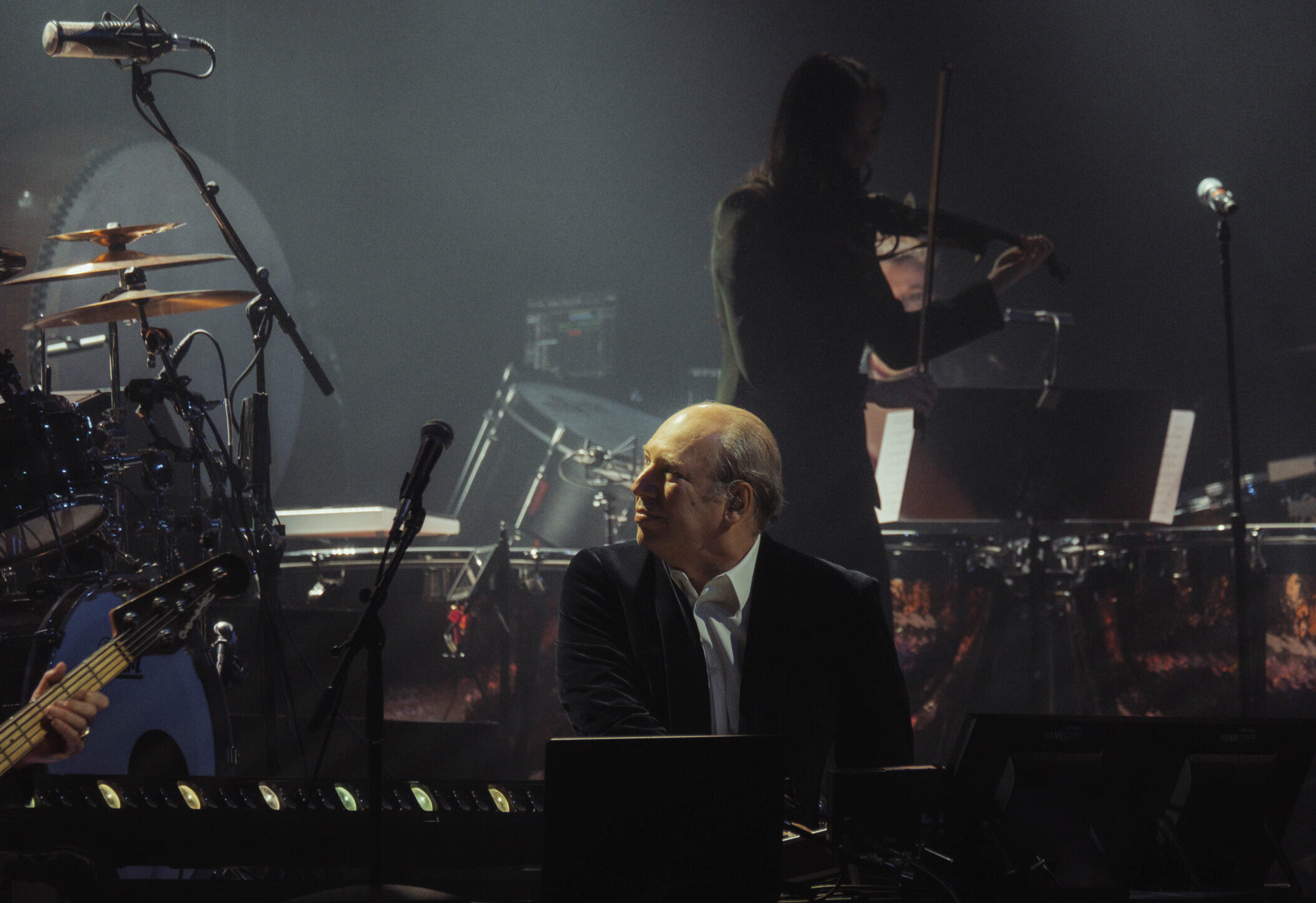
Words by Laurent Swyngedauw
There's a very narrow lane to tread when a concert appeals to both film and music fans, but Hans Zimmer's performance at Manchester's Co-Op Live navigated this balance like no one else could. For those who may not know, Zimmer the musical genius behind a vast catalogue of Hollywood blockbusters from superhero epics like The Dark Knight and Man of Steel, to Pirates of the Caribbean, Gladiator, and Interstellar. His composing discography is still growing to this day, with films like Dune and F1 now making the list.
The first thing that many will have noticed when entering the arena was the stage itself, which had different levels depending on the type of instrument each musician played. String instruments occupied the bottom tier, with percussion elevated above them, whilst vocalists were scattered strategically depending on the piece. The arrangement would shift slightly throughout the evening – the Lion King suite, for instance, had singers positioned all throughout the space to create an immersive, choral effect.
Above it all hung a giant screen flanked by moving lights that changed with each piece to match the film it represented. The visuals were deeply cinematic; you could almost picture the scenes playing out as the music swelled around. The stage production was equally impressive, with lighting that complemented rather than overshadowed the music itself.
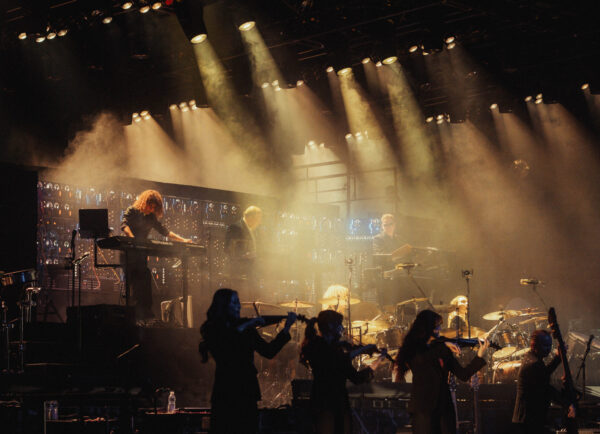
Credit: Laurent Swyngedauw @ The Mancunion
Zimmer's setup – a fusion of classical instrumentation and electronic elements – created a sonic landscape that brought his legendary film scores to vivid life. He opened with the metronomic bass line from The Dark Knight slowly getting louder and louder. Black, blue, and white strobing lights pulsed from every direction – from the bottom, from the top, spotlights almost following the beats of the music as though a Batmobile was about to surge onto the stage. Lights came from all directions, reflecting the chaos and crime of Gotham itself, while pulsing electronics and driving percussion captured that sense of barely contained chaos perfectly.
Between songs, Zimmer shared stories about the upcoming pieces, his genuine joy and enthusiasm infectious. He clearly respects both the music and the audience, creating an atmosphere that felt intimate despite the arena's size. Before Dune, he mentioned that for this tour he'd made it more electric-based, then launched into a punkier, more aggressive version. Yellow lights flooded the stadium, making the audience feel as though they were standing in the sands of Arrakis.
What stood out amongst the performers were some of their outfits: certain leading musicians wore particular costumes to match the themes of their films. One singer wore a stunning golden dress, whilst a cellist performed in striking red. These weren't gimmicks; they added to the theatrical nature of the evening.
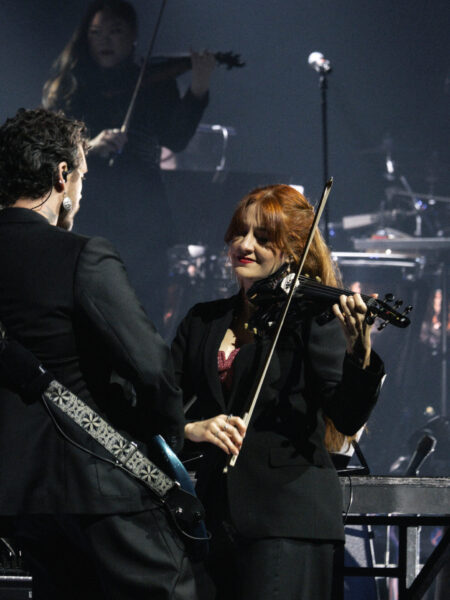
Credit: Laurent Swyngedauw @ The Mancunion
The superhero themes continued with the suite of pieces from Man of Steel, where the percussion and guitars really took the lead before the crescendo climbed higher and higher to reflect Superman shooting up into space. As the familiar themes played, it was easy to envision the films' scenes, such is the power of Zimmer's musical storytelling.
Before Gladiator, Zimmer explained that typically he can create a full film soundtrack with one main theme and two side themes. But for this particular score, he'd created nineteen distinct tracks. What followed was what he called "the director's cut of Gladiator" – a medley incorporating parts of all nineteen tracks, including the leading themes. It was achingly beautiful, reflecting the emotional beats of the film. The F1 theme also proved a standout, being more exhilarating and unique than anything else in the setlist. Fast-paced, synth-heavy, almost like an eighties outrun anthem, it featured an impressive guitar solo whilst visuals displayed speed and movement like racing through a Formula 1 circuit.
Before Interstellar, Zimmer shared the story of one of cinema's most fascinating composer-director collaborations. Christopher Nolan had written him a one-page letter describing only the emotional core: a father's relationship with his children, a parent leaving to work far away. Nolan never mentioned that it was a science-fiction film or that it was set in space, wanting Zimmer to focus purely on human emotion rather than genre expectations. He composed a simple, intimate piano piece in just one day – what would become the film's main theme. When he played it for Nolan, it confirmed the director's inspiration to create a sci-fi film centred on a parental relationship.
Interstellar live was mesmerising. The raw, emotional piano theme that started it all built with so many instrumental layers, with the prominent pipe organ, strings, and vocals all weaving together. Zimmer's choice to feature the organ gave the score a timeless, spiritual quality, representing both the scientific and the divine. Visuals of space, black holes, and galaxies filled the screen, whilst a dancer in a reflective dress performed on the ceiling, reflecting light to create an effect of stars glowing throughout the arena. This moment felt transcendent, like stepping into another dimension entirely – you could have heard a pin drop during the quieter passages before the emotional release of the full orchestral.
Zimmer closed with a suite from The Lion King, the stage bathed in colours to match the African continent – warm oranges, reds, and golds that transported the audience to the Pride Lands, vocals soaring with such power you could almost feel the savannah breeze. Pirates of the Caribbean provided another high point, the suite building to its instantly recognisable main theme. Visuals of boats, storms, and seas crashed across the screen behind the orchestra, the swashbuckling energy infectious. It was all barnstorming fun and, by this point, Zimmer had the entire arena in the palm of his hand.
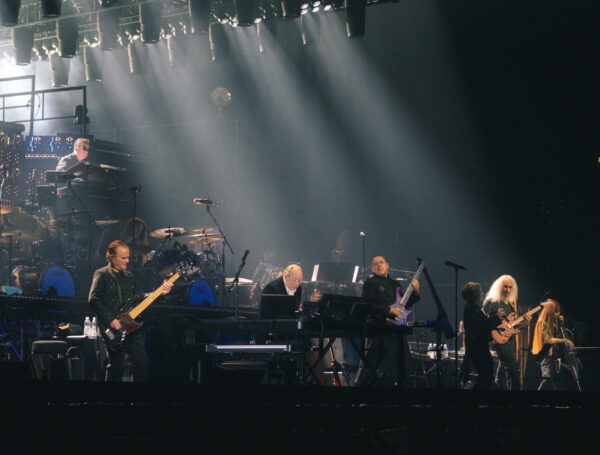
Credit: Laurent Swyngedauw @ The Mancunion
The final song, 'Time' from Inception, was perhaps his most emotionally devastating piece. It began with a simple piano melody, delicate and haunting, before the strings gradually joined in. Layer by layer, the orchestra built upon itself. That signature ascending progression growing louder and more urgent until it reached its crushing climax as the entire arena breathed as one.
Co-Op Live proved an excellent venue for this kind of spectacle, the lighting capabilities and the acoustics doing justice to both the delicate and full blast moments. This was proof that film music deserves to be celebrated as a legitimate art form in its own right, and a reminder of cinema's power to move. Zimmer's genius lies not just in his compositions, but in his understanding that music is the soul of cinema. At Co-Op Live, we experienced both.
Comments
Powered by DisqusComments are provided by Disqus.