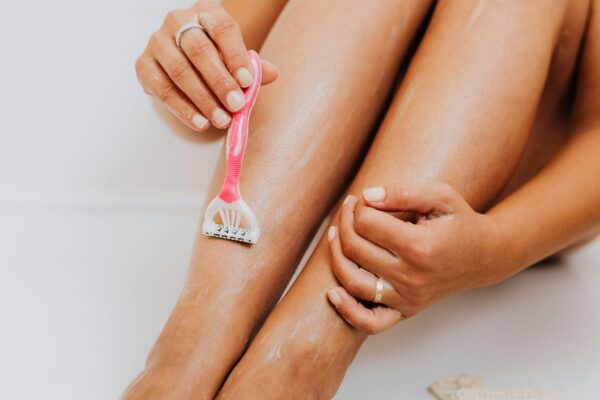
The conversation around female body hair feels like a broken record. Time and time again we’re told to shave it all off - that it’s unhygienic, dirty and disgusting. Society isn’t afraid to share its opinion on this aspect of women’s bodies, but has it always been this way?
Body hair removal has been around for centuries, with evidence of the practice dating back to the Ancient Egyptians. After this, body hair wasn’t much of a concern up until the early 20th century.
In 1915, to sell their new product, Milady Décolleté, Gillette released an advert campaigning that shaving armpit hair was a necessity for women. Convincing us that body hair is unattractive and being hairless is the ideal allowed for a lucrative market to be born. Since then, studies have shown that the average woman will spend around £6,500 on shaving products over her lifetime. As beauty standards evolved, fashion trends began to reinforce these expectations.
In the 1920s, fashion took a bold new direction. Sleeveless dresses became all the rage, exposing women’s legs and, with them, leg hair. As bikinis later became more revealing women felt growing pressure to become hair-free down there, and the era of the bush began to fade.
In 2000, Sex and the City aired an episode which showed Carrie Bradshaw getting a Brazilian wax, and suddenly beauty salons were booked solid with women wanting the same treatment.
Nowadays, there are countless ways to remove body hair: from razors and waxes, to hair removal cream and epilators. Beauty companies are constantly coming out with new methods, profiting off our insecurities in the process. Laser hair removal has become increasingly popular among the wealthy – a permanent but expensive solution to eradicating your body hair completely.
Ultimately, much of this comes down to personal choice and doing what is right for you, and many people do feel more confident when they remove body hair. Yet, what began over a century ago as a marketing strategy has become a major source of insecurity for women today.
Sexism underlies much of the stigma surrounding shaving. Despite men generally having more body hair than women, there is far less pressure for them to remove it. Instead, this is often seen as a show of masculinity, something to show off and even to take pride in. These pressures don’t just impact cisgender women, but also have an impact on non-binary and trans people whilst navigating their gender expression.
Of course, it’s completely valid to have your own opinion on the matter – it’s your body after all – but it’s important to recognise the demonisation that has resulted from these beauty standards, and how some view body hair as ‘gross’, projecting this hostility onto others. Social media has amplified this problem, with creators being shamed and called disgusting in the comment sections on Instagram posts showing women resisting the expectation.
Despite the lingering negativity, TikTok and Instagram have become powerful tools for challenging the stigma around body hair. Creators have launched initiatives, including ‘Januhairy’ – a campaign started in 2018 to encourage women to accept their body hair and go a month without shaving. Many participants have described the experience as liberating, making a meaningful step in the right direction.
Although hair removal has haunted the narrative for decades, procedures like pubic hair transplants are now becoming more common. This involves transplanting hair from the scalp to the pubic region, to restore growth. Such procedures have become increasingly popular in Korea, where pubic hair is seen as a sign of fertility. Could this be a sign that hairlessness is finally going out of fashion?
Not shaving body hair can benefit us in many ways: it prevents razor burn, reduces ingrown hairs, and saves money on supplies. The fact that body hair is becoming increasingly accepted gives hope that boundaries are being pushed and beauty standards are being redefined.
Whether you prefer smooth, hair-free skin or embrace your natural hair, the choice should be personal. It’s time society took a back seat when it comes to women’s bodies.
Comments
Powered by DisqusComments are provided by Disqus.