With the humanitarian situation in Palestine's Gaza Strip reaching even worse levels than before, with mass displacement of Palestinians within the Gaza Strip, and at least 65,000 people killed, Western and Arab states have taken new steps to push for an immediate end to the war and a resumption of the Israeli-Palestinian peace process.
This new approach has been driven by France and Saudi Arabia, who are co-chairing the verbosely named High-level International Conference for the Peaceful Settlement of the Question of Palestine and the Implementation of the Two-State Solution.
As part of this effort, multiple states have announced their intention to recognise the State of Palestine, and more have stepped up their criticisms of Israel's actions.
Since May, France has lobbied other European states to join it in following Ireland, Norway, and Spain's 2024 decision to recognise Palestine. Pushing the initiative further, French President Emmanuel Macron announced shortly before the July phase of the French-Saudi conference that France intended to recognise the state. The move was positioned as one to protect the internationally favoured two-state solution and increase pressure on Israel.
Similarly, on July 29, then United Kingdom (UK) Foreign Secretary, David Lammy, spoke at the United Nations (UN), echoing language used by Tony Blair during the Good Friday Agreement negotiations, stated that "it is with the hand of history on our shoulders that His Majesty’s Government ... intends to recognise the State of Palestine when the UN General Assembly gathers in September".
Resultantly, on September 21, the UK, alongside Portugal, Australia, and Canada, recognised Palestine. The following day, France, the country that drove this initiative forward, followed suit.
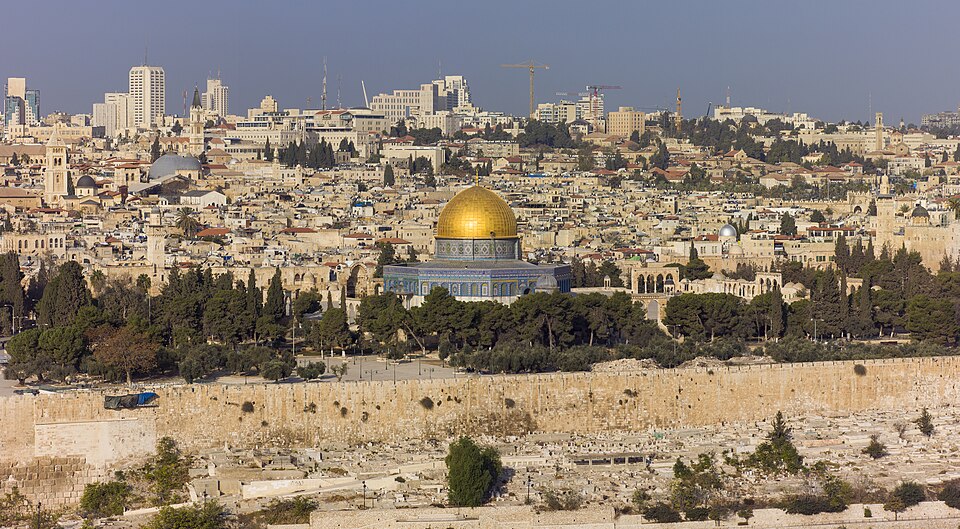
Palestine's territorial claims consist of the West Bank, Gaza Strip, and East Jerusalem (areas held by Egyptian and Jordanian forces following the 1948 Arab-Israeli War). These areas have been under Israeli occupation since the 1967 Six-Day War.
Other European states have been unwilling to agree to recognition, including Italy, the Netherlands, and Greece. Some, such as Italy's PM Giorgia Meloni, described recognition before the establishment of a state as "counterproductive". Similarly, Germany has also refused to recognise Palestine despite recently increasing criticism of Israel's conduct in Gaza.
Increased condemnation has not been limited to Israel; the 22-member Arab League has increased its criticism of Hamas, including calling for it to disarm and end its rule of the Gaza Strip. In July, the Arab League also called for the release of all remaining Israeli hostages and condemned the Hamas-led 2023 October 7 attack on Israel, which killed approximately 1200 people. This brings Arab states in line with most Western states, whom have long designated Hamas as a terrorist organisation, including the UK.
The changes in both Western and Arab states' approaches aim to lead to increases in pressure to achieve their goals. The French-Saudi conference agreed to an extensive plan for ending the war, the New York Declaration. The declaration was endorsed by 142 states at the UN General Assembly, with 10 states voting against, including Israel and the United States (US).
The US's radically different approach, going as far as characterising other Western states' recognition of Palestine as rewarding Hamas, will limit the pressure on its closest ally in the region.
In the UK, some have mirrored the White House's views; both Conservative and Reform party leaders, Kemi Badenoch and Nigel Farage, described British recognition as rewarding terrorism. Both party leaders spoke to the Israeli Foreign Minister, Gideon Sa'ar, shortly after British recognition.
Others have had more mixed reactions to the announcement. Ed Davey, leader of the Liberal Democrats, described recognition as "a welcome step" but not "the end" of the process. Those to the left of Labour, including Green Party leader Zack Polanski, and former Labour Party leader Jeremy Corbyn, were far more critical, calling for much harsher action against Israel.
Similar domestic reactions have been seen in other countries.
Ultimately, recognition of statehood represents the ultimate recognition of the Palestinian national movement, which will form a part of any realistic peace solution. More pragmatically, recognition and increasing criticism of the war's combatants by both Arab and Western states increases pressure to end the humanitarian catastrophe in Gaza. While US intransigence will limit the campaign's effectiveness, it would be wrong to characterise the events of the past few months as merely empty words.
Comments
Powered by DisqusComments are provided by Disqus.