We often group illnesses at the start of a new semester as "Freshers’ flu"— an assortment of colds, hangovers, and aches and pains that seem to come with the colder weather and new environment. The normalisation of Freshers’ flu in September doesn’t make us immune to its dangers, which is why Sepsis Awareness Month is such an important opportunity to spread knowledge of sepsis.
Credit: Sepsis Research FEAT
What is sepsis?
Sepsis is a dangerous condition that results from an overwhelming inflammatory response to infection. The body’s immune system kicks into overdrive and starts fighting not only the infection, but its own tissues and cells as well. It is a rapidly developing illness that can easily be fatal, even with access to medical treatment.
A cold, a urinary tract infection (UTI), or even an infected cut can lead to sepsis developing if not treated promptly and properly. It can, in fact, be caused by any infection, including bacterial, fungal, and viral, and is a devastating disease that affects around 250,000 people across the UK every year.
Colin Graham, Chief Operating Officer of the charity Sepsis Research FEAT, stated that “Out of those who survive (sepsis), roughly 40-50% will be left with life-changing physical and psychological conditions”.
How can sepsis develop?
Those with weakened immune systems, older people, and people with diabetes are more prone to developing sepsis. But that does not mean younger people are immune.
Being in shared housing and meeting new people exposes you to infections and provides the opportunity for diseases to spread through the student population. A stressful assignment and late nights partying can lead to a weakened immune system, and many underestimate how vulnerable to disease this can make them.
With early treatment, serious complications from sepsis can be prevented. However, sepsis symptoms can be hard to discern from any other infection, so what do we need to look out for?
Symptoms of sepsis
Credit: Sepsis Research FEAT
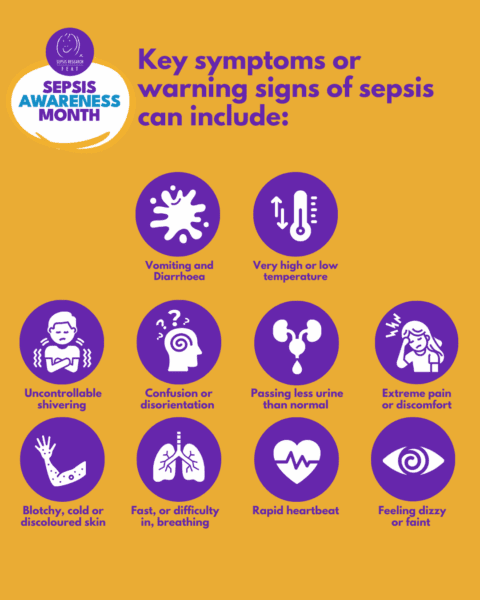
Some common symptoms of sepsis include vomiting and diarrhoea, a very high or low temperature, uncontrollable shivering, confusion or disorientation, and passing less urine than normal. People with sepsis may also experience extreme pain or discomfort, blotchy, cold or discoloured skin, fast or difficult breathing, a rapid heartbeat, and feelings of dizziness or faintness.
This is by no means an extensive or exclusive list, but it gives an idea of the signs to look for. A combination of these symptoms, or those that get progressively worse, indicates it's time to seek medical attention.
What you can do to stay safe
Keeping up to date on your vaccinations, making sure you are registered with a local GP and dentist, and looking out for your friends and flatmates goes a long way in preventing complications with sepsis. Vaccination against Meningitis B is especially important, as for younger people this can be a common precursor to sepsis.
Not every sniffle and cough will lead to sepsis. However, simply being aware of the dangers of sepsis and being prepared to advocate for your health and symptoms if they appear will keep you and those around you ready and prepared.
Find out more
To learn more about sepsis, its symptoms, and how to recognise it early, you can visit Sepsis Research. They also have a detailed feature on Sepsis Awareness Month, which highlights ongoing research, personal stories, and practical advice on prevention and treatment — available here.
Comments
Powered by DisqusComments are provided by Disqus.