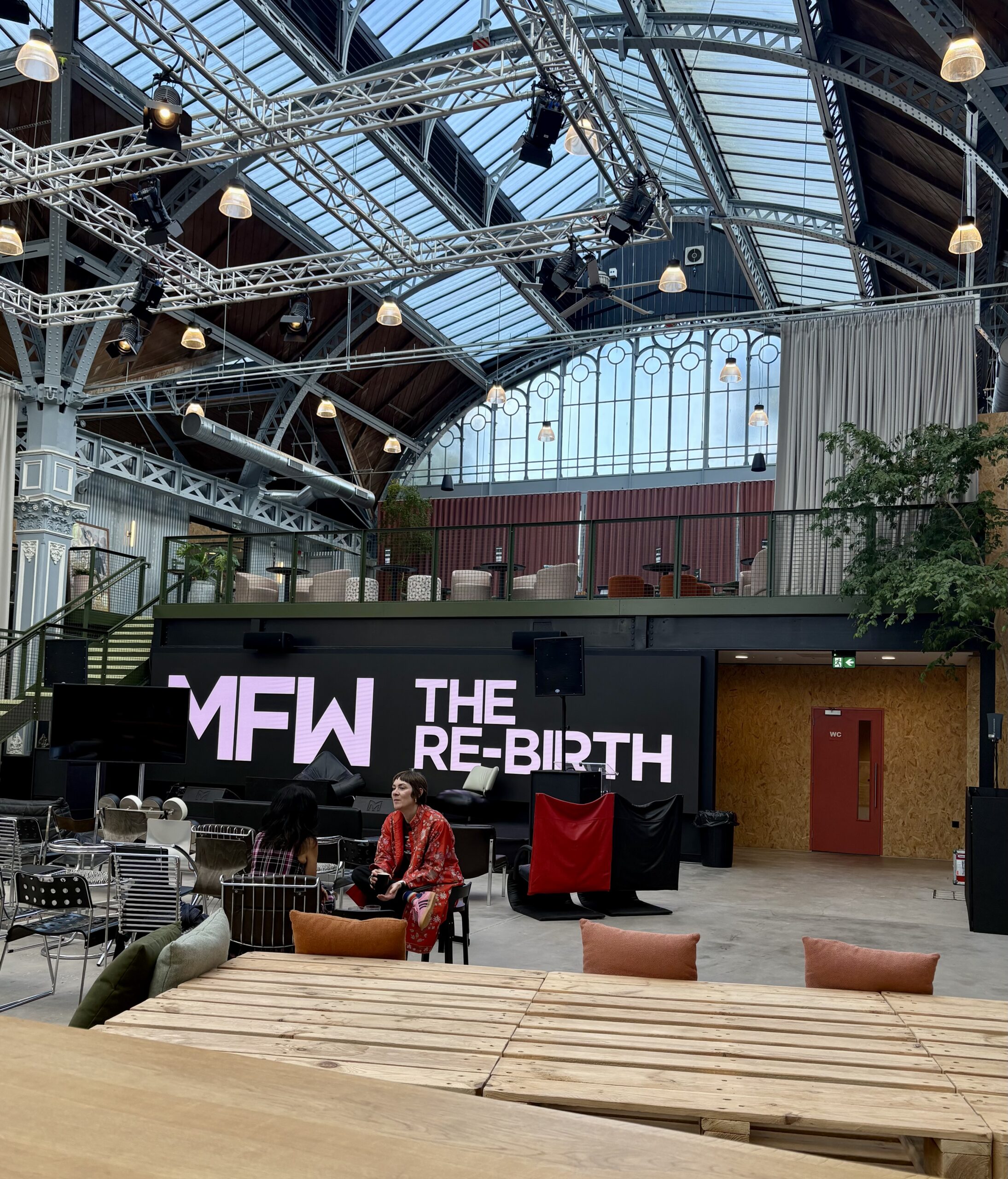
After a decade-long hiatus, Manchester Fashion Week has returned with 'The Rebirth'. This time, however, it’s not just about clothes on the runway. The event has brought a refreshing energy to the city, asking bigger questions about sustainability, ethics and the colonial legacies that shape the global fashion industry.
From 9 - 11 September, Campfield House came alive with a mix of talks, workshops, demonstrations, and runways, showcasing a new wave of designers. On the second day, under the theme of 'ecosystems and outerwear', the conversation turned from creativity to critique.
The morning began quietly. Registration closed at 10am, yet only a handful of attendees had gathered in the small sunlit hall. Some teething problems were evident after the event’s ten-year absence: little information was provided at sign-in, and the opening began half an hour late. Sparse attendance gave the impression of a modest restart, but the intimacy of the room also allowed for open dialogue.
The first session was a critical look at colonialism in the supply chain, led by Lavinia Muth, an (un)sustainability consultant, and Safia Minney, social entrepreneur and founder of Fashion Declares.
Colonialism in the fashion supply chain
Muth began by highlighting the often-overlooked colonial legacies deeply embedded in the modern fashion system. At the root of global fashion, she explained, lies the exploitation of physical labour to harvest raw materials, like cotton and silk.
She described how sustainability narratives are too often framed through a "white supremacist" lens. Former colonies, such as Bangladesh, remain heavily reliant on the textile industry for economic growth, tying into the Western demand. According to The Guardian, the average wage for Bangladeshi garment workers is £73.85 a month, far below a liveable wage. However, it must be said that the textile industry does provide essential income to Global South economies and has transformed Bangladesh from one of the poorest nations into a lower-middle-income country.
This dependency keeps wealth and power concentrated in the Global North. Traditional methods of textile production have been side-lined in favour of industrial models that prioritise profit. Muth stressed that low wages, forced overtime, and poor working conditions endured by many workers are put in place by design as structural tools to maintain imbalance.
"Slave to fashion"
Following on from Muth, Safia Minney, founder of Fashion Declares, offered a personal perspective. Drawing on her own indigenous heritage, she described travelling through Asian farming and artisan communities as a journey back to her roots. She touched on women’s vital roles in the Global South, where their skills in crafts provide economic lifelines for families.
But she also delivered a stark warning: modern-day slavery remains endemic in parts of the supply chain. The Walk Free Foundation estimate that around 50 million people are trapped in slavery worldwide, many in sectors linking to textiles. The quote "slave to fashion" took a chilling resonance as Minney recounted the abuses endured by workers, ranging from debt bondage to harassment.
Following this, Minney expanded her focus to the environment. She argued that fair trade needs to fit within the limitations of the biosphere, whilst also distributing wealth and resources. The fashion industry accounts for 8-10% of global carbon emissions, and, without systemic reform, fashion risks exacerbating issues like food scarcity and forced migration. Minney stated that by 2070, a third of the population would be faced with food insecurity, with countries like Sudan and Haiti already being impacted.
Beyond the runway
What stood out most was the dedication of both speakers to challenging the glittery façade of fashion and inviting us to look beyond the flashing lights of the runway. Their interventions forced the audience to confront the “unfinished empire”: an industry still structured around historical exploitation and inequalities.
As Manchester Fashion Week looks to the future, these conversations hint at a shift in tone. The ethics of material sourcing, labour rights, and environmental limits are inseparable from the clothing we wear. Even though this idea can be uncomfortable it must be one that is confronted and questioned. Both designers and consumers are encouraged to ask not only what something looks like, but where it comes from, who made it, and at what cost?
Comments
Powered by DisqusComments are provided by Disqus.