The year is 1976. Paul McCartney has once again taken America by storm, this time with his newly resplendent Wings, while his erstwhile song-writing partner, John Lennon, has been a shut-in for the last five years, concerned mainly with his infant son and baking bread.
We learn this through a pair of recreated interview clips in director Scot Williams' play performance of Two of Us: Paul first and then John. Where Paul appears besuited and combed, John is in a t-shirt and jeans; where Paul is anxiously amiable, John is almost overly eager to be straightforward. These are mirror images, defined against one another.
But then comes to the inescapable question: "Will The Beatles ever get back together?" And, although the expressions may differ, both men have fundamentally the same response. "I don’t know." And here the scene is laid for the play’s thesis. Reflections they may be, but John and Paul have both grown from the same root, and neither will ever be able to escape the other’s implicit presence in his life.
The play’s whole shape emerges as soon as Paul steps out into John’s pristinely white apartment: a dynamic and comfortably intimate duologue that draws the audience into the turbulent history between these two men as they oscillate between estranged childhood friends playing with old jokes and the oppositional artistic forces they have grown into.
They come together, fall apart, come together again, and then, at last, take their leave of one another for the lives that they've built since splitting in 1969.
The script, adapted from Mark Stanfield’s screenplay of the 2000 film of the same name by Richard Short and Barry Sloane, is for the most part witty and direct, giving the play a tight cohesion throughout its runtime. It also draws on real anecdotes (John’s “Fuck a pig it’s Paul!” when he hears him on the radio) from Lennon and McCartney’s lives to give their onstage depictions a forceful realism.
And yet, most of Two of Us' energy and emotional weight depends, however, on the performances of its actors, who manage to disappear almost completely into the larger-than-life figures they have been tasked with performing.
Barry Sloane is a twitchy, unnerved John, whose bursts of anger and general instability are more heartrending than anything else. He paints a portrait of raw vulnerability in a man who has long since abandoned the internalisation of his own feelings.
Jay Johnson’s Paul, in contrast, prances around both the set and any mentions of unpleasant emotions. He is comically fussy and strangely whimsical, unable to commit fully to the confrontation that is so clearly brewing.
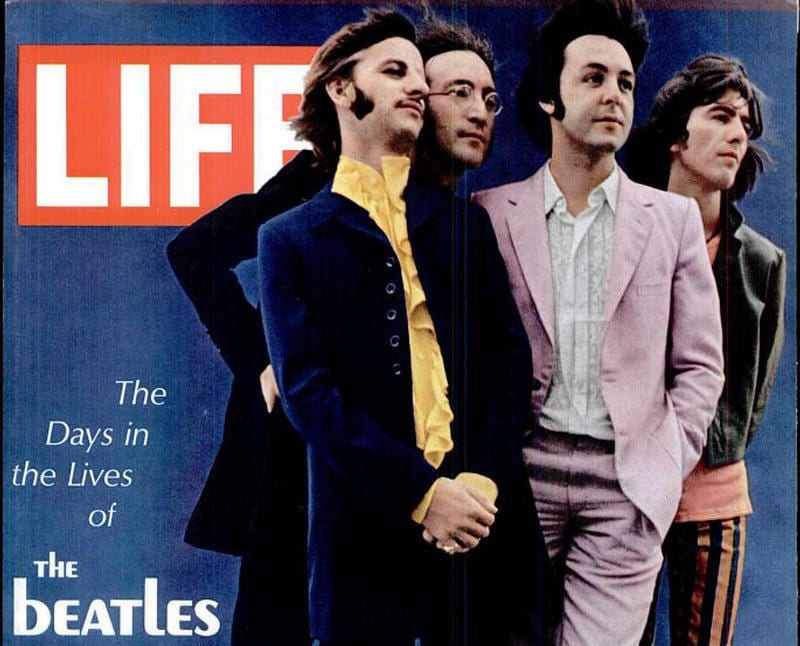
Both actors brilliantly mimic the physicality of the men they're portraying – despite the slight inconsistency of their accents and the distracting artificiality of their wigs – and it's easy to forget while watching them that they're separate entities from real footage of The Beatles.
I think that's part of the fundamental question that lies beneath the whole of Two of Us in the end, from listening to McCartney and Lennon’s music during the interval, to recognising quotes from interviews and biographies. Where is the line drawn between public figure and fictional character?
The John and Paul on stage are not quite true-to-life depictions of John Lennon and Paul McCartney – for one, they're wearing the wrong clothes and hairstyles for their setting, possibly a decision made with the assumption that the audience would only be familiar with The Beatles’ appearances in the widely celebrated Get Back documentary, or even potentially a purposeful reminder of the play's fictionality.
The images of McCartney and Lennon have been carefully cut out and pasted into the play’s set, the neatly square design of which even resembles a model apartment, bordered on either side by an expanse of darkness. In retrospect there is a strange heaviness to one of John’s lines at the beginning of the play, joking over the intercom “Help I’m trapped in a little box!”
The only time that John and Paul ever escape the box is at the very end of the play, as they climb up to the roof and try to connect to each other on an emotional level beneath their arguments. It's an attempt to extricate themselves from the way that public perception of their feud has seeped into their own opinions of one another, burying each man’s true sense of self.
But they're in a play, and there is no ‘true self’ for the cut outs, only the audience’s understanding of two characters. Lennon and McCartney will perhaps never escape the eyes of the public, their ghosts having entered into a literary canon from which they will never be able to escape.
In the end, there are two sides to Two of Us: there's the true drama, which manages to be both a compelling and energetic piece of theatre, and then there's a startlingly clear example of the way in which a person who is also public figure may never have complete ownership of their own identity.
Comments
Powered by DisqusComments are provided by Disqus.