How much does Manchester really have to answer for?
It is my first day of my last year at University. The nostalgia seems to have already begun, along with a sense of panic and a whole lot of sentimentality for student life.
“These are the best years of your life”, says Richard Davis, the legendary photographer who sits in front of me now. He is a complete likeness to the young man he once was, the very young man that 36 years ago - this very week - moved into Manchester student halls, putting him in just the right place at just the right time.
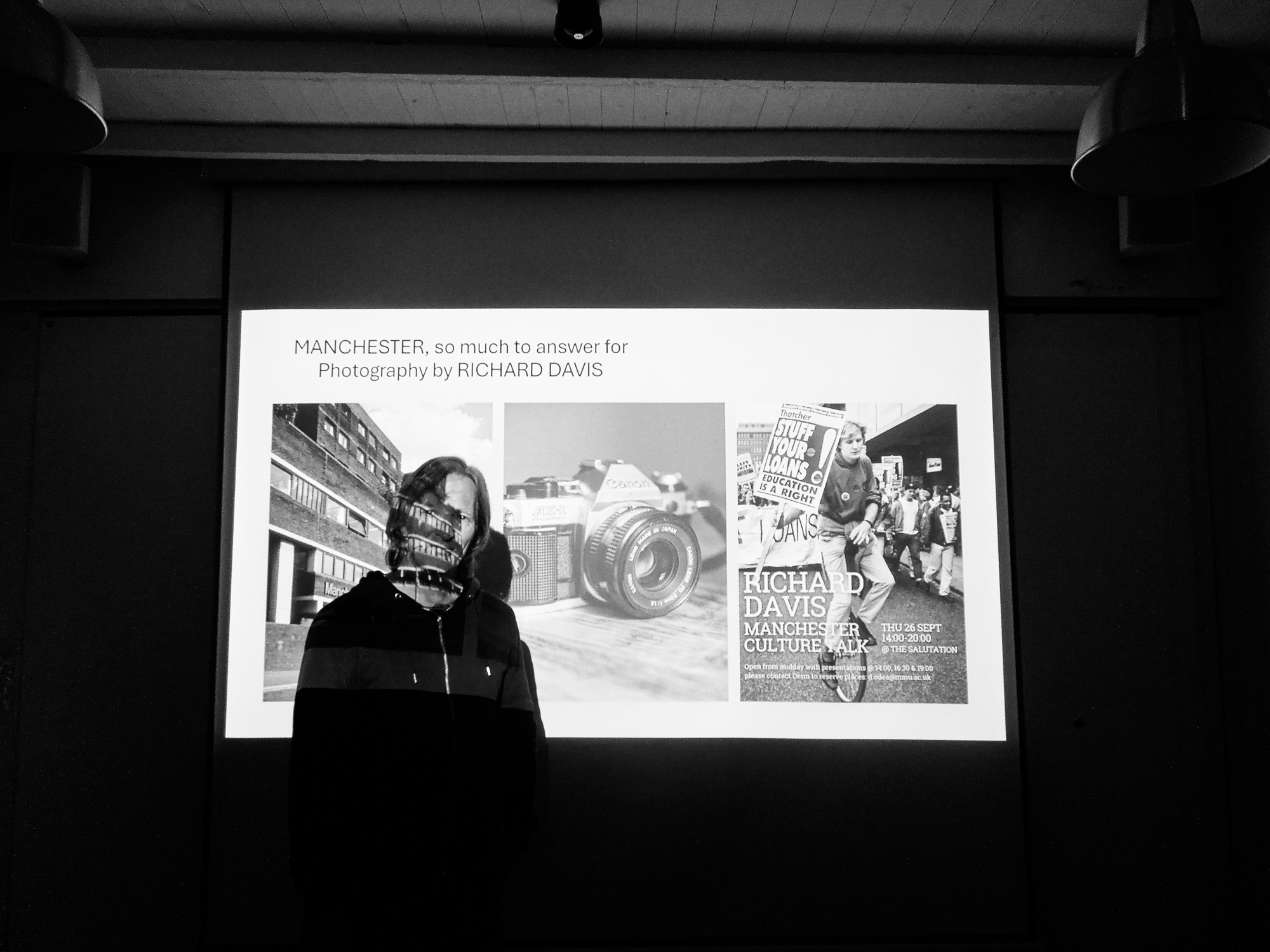
It is a gusty, billowy evening in Manchester as we sit above The Salutation pub for a chat. Davis has just finished a fascinating talk on his iconic photography that documented Manchester’s culture whilst music and comedy flourished throughout the city.
The early 90s became the backdrop for Richard’s photography. He was a floppy haired student armed with a camera, a love for music and a passion , bordering on obsession, for photography.
We begin in Birmingham. Growing up, Richard would look up the M6 longingly; wistfully dreaming of Manchester, a future and a purpose. He describes his discovery of photography beautifully; in a darkroom, in his hometown, he watched a face slowly bloom in the developing tray. “I was hooked”, he announces, grinning, “photography saved me. I became motivated to the point of obsession”.
It all changed from there for Richard. His love for Manchester and its “constructive bullshit” led him to enrol as a student at Manchester Polytechnic where he moved into Cavendish Halls and became utterly enamoured by the city, although he was in love with it before he even arrived. “I love the arrogance of this place”, he admits. This surprises me, as he himself is anything but arrogant. A humble man, a perfectionist, a self-critic and the absolute definition of a hard worker.
University was his big chance. A chance to cultivate skills, learn, push himself, drive his passions and learn. He didn’t waste a single second. He urges us students to do the same; “make mistakes and keep making more”.
His advice for the students of today is steeped in experience. Kind and reassuring in his manner, confident and knowledgeable in his ways…Davis’ knows what he is talking about. I find myself listening, enraptured. “Don’t be afraid”, a sentiment I needed to hear, a sentiment I feel is important for anyone at university to hear, with so much change, beginnings and endings in the air.
Credit: Anna Marsden @The Mancunion
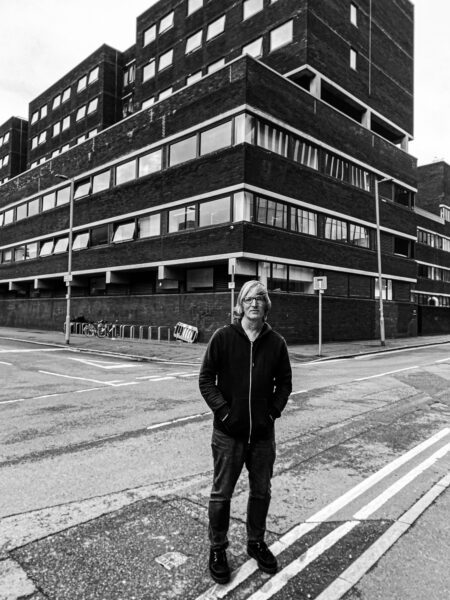
Our conversation develops into advice for aspiring artists, photographers, and creatives. “The camera taught me how to actually see”, he says, leaning back in his chair and looking thoughtfully around. Photography gave him sight, it helped him to not only look, but to understand. There is no better example for this than Richard Davis’ documentation of Hulme at the time.
Moving into a squat in the infamous amphitheatre of the Hulme crescents, Richard’s art became his life. With a darkroom and a makeshift studio of black and white sheets, he spent his time shooting and developing, processing and waiting for negatives to dry overnight. With one tiny blacked out window and a bathroom filled with chemicals it wasn’t long before “every penny went to photography”. By day he would photograph the likes of the fabulous Caroline Aherne and Steve Coogan, armed with a single lamp. By night he was preparing contact sheets and perfecting his style. He didn’t know that the work blooming in those four walls would become a testament to an era in time before everything changed forever.
Richard loved the crescents, he loved what they represented, what they could have been, and what they should’ve been. His only regret is that he didn’t take more pictures of them whilst they were still standing. Demolished in the early 1990s, the crescents were a social and cultural phenomenon, making them the perfect subject for Richard’s creativity.
To Richard, a good photograph is made up of context, history and the bigger picture. It is made up of places, politics and the people. Great images are great because of their relevance, their place in history, their position in time. “The role of a photographer is to capture moments in time”, he tells me as our conversation nears the end. He says this without a shred of self-importance although he understands that his photography was vital in remembering an era before it all changed.
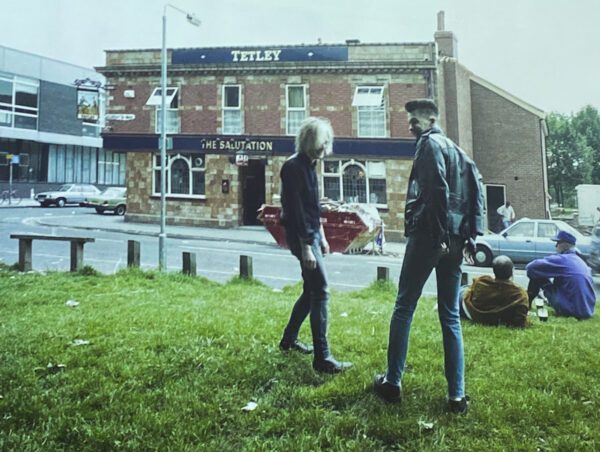
The days of capturing Nirvana, The Happy Mondays, student protests, Tony Wilson and the Madchester era was over. Times had changed and things weren’t the same as they used to be. He has dozens of cardboard boxes somewhere, an archive of a Manchester unknown to the students of today, a city that we can imagine because of artists like Richard saving it for us so we can understand, can learn, can change and grow and actually see.
Credit: Richard Davis
The love Richard has for his student days, for this city, the red brick, the dark canals, the communities and memories makes me prematurely nostalgic for my own time here. In front of me is a man who went with his gut, came to a big city and never wasted a single second. He was driven and passionate, and now his archive is one big love letter to Manchester. I hope when people see his photographs, they feel what Richard felt.
I leave Richard with one last question, a kind of ode to nostalgia, a tempting of fate; “Luck or choice?” I ask.
And, in the Birmingham accent he hasn’t seemed to have lost, he answers, “Luck”.
Manchester, just so much to answer for.
Comments
Powered by DisqusComments are provided by Disqus.